Whatever a visit to your site is supposed to end in, an order, a lead, a booking, a call, this audit reads what the best sites in and around your category do about it, checks each thing against what your site does today, and hands you one ranked sheet of changes with the proof beside each row.


At the same ad spend, a 10% lift in conversion is about 9% off the cost of every order. Conversion is the cheapest revenue a paid-media buyer can add, because the media is already bought.
Companies that improve their primary metric by 6% or more in a year are almost twice as likely to run a structured optimisation programme than an ad hoc one. This is the structure.
The deliverable is a sheet you keep. Mark rows shipped, and the next round starts from what changed, at a fraction of the first.
The ways a visit can end that matter commercially, written down first, with what each is worth today.
Your own site against the same checklist as everyone else's, so every finding is a gap or a parity, never a note.
Competitors and benchmark sites, captured mobile-first, every observation with its screenshot.
Four visible parts to every score. The score sorts the list; you can argue with any part of it.
Reference patterns from a live round, redrawn as schematics so that no site is identifiable.
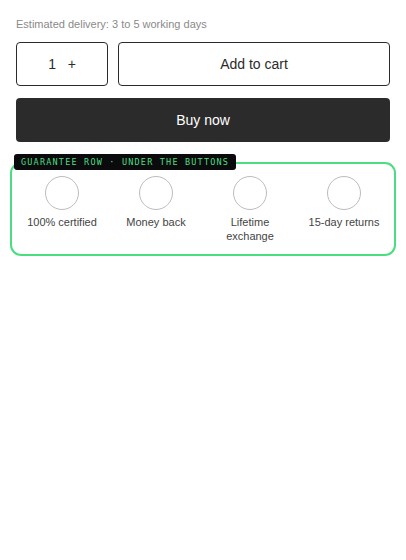
Competitor pattern · Schematic
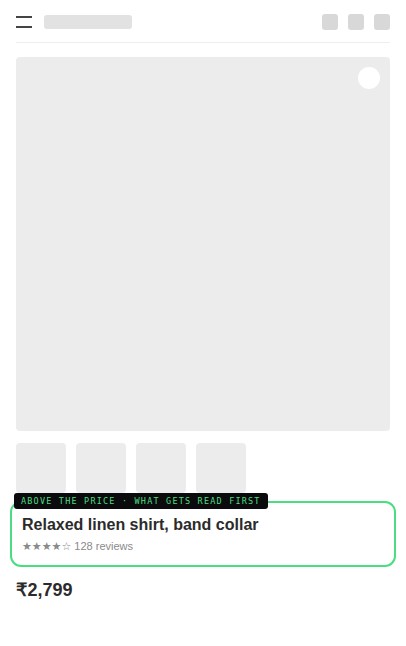
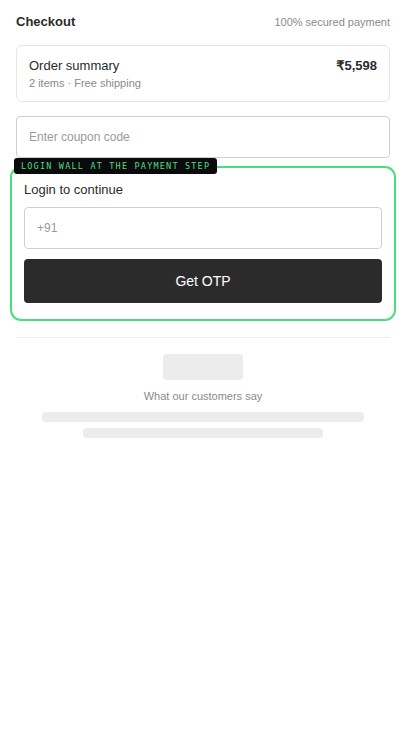
Reversibility is what makes a first order possible. One in five abandoned checkouts is a trust problem.
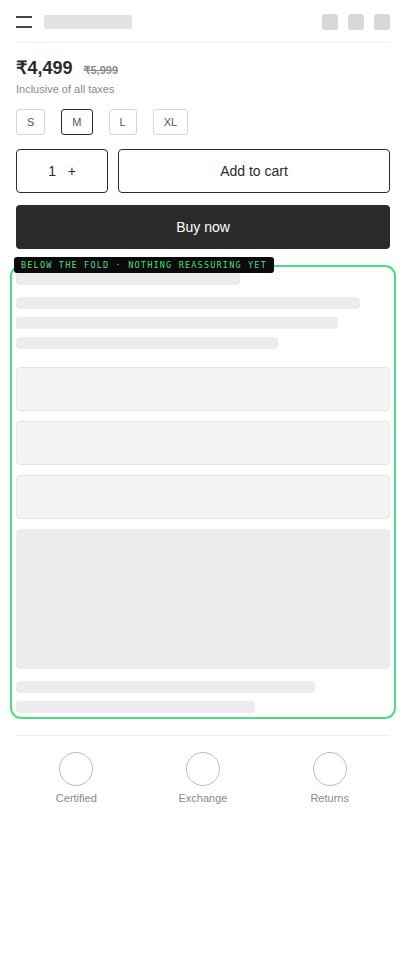
Competitor pattern · Schematic
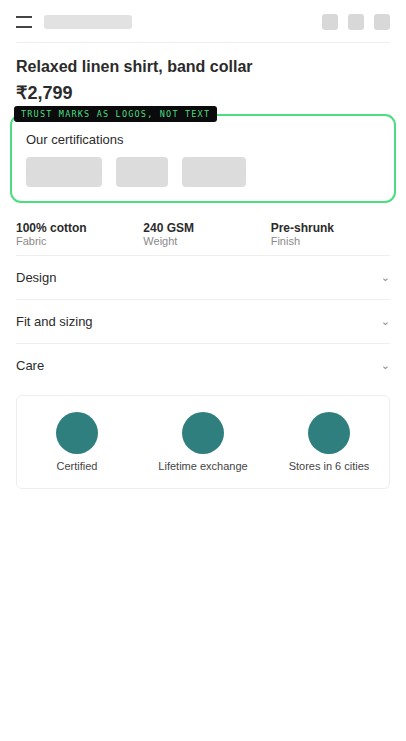
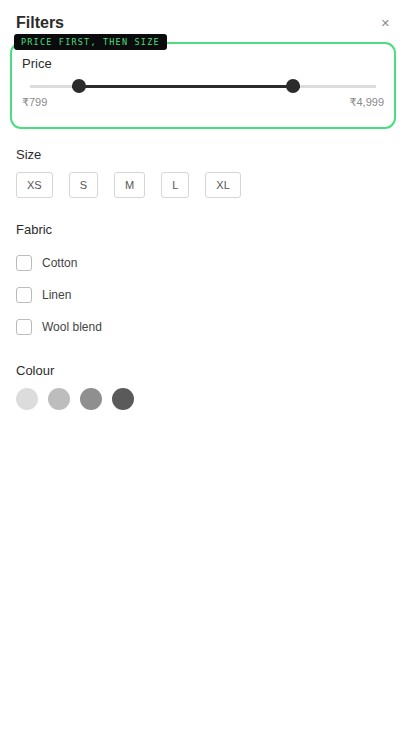
Borrowed credibility, placed where the decision is made.
Competitor pattern · Schematic
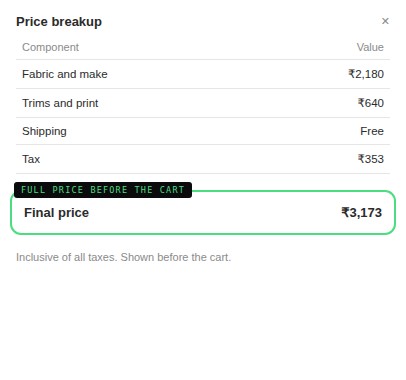
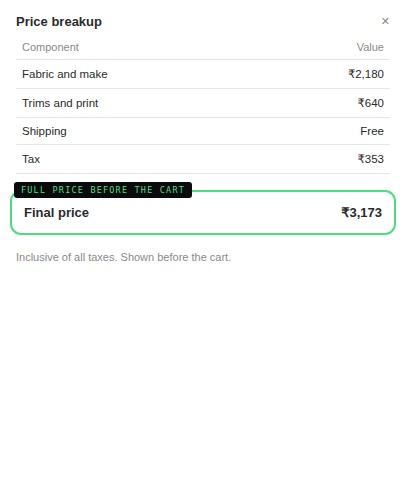
One in eight abandoned checkouts is a shopper who could not see the total cost upfront.
Competitor pattern · Schematic
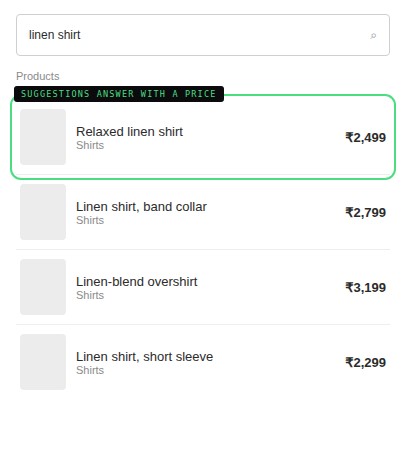
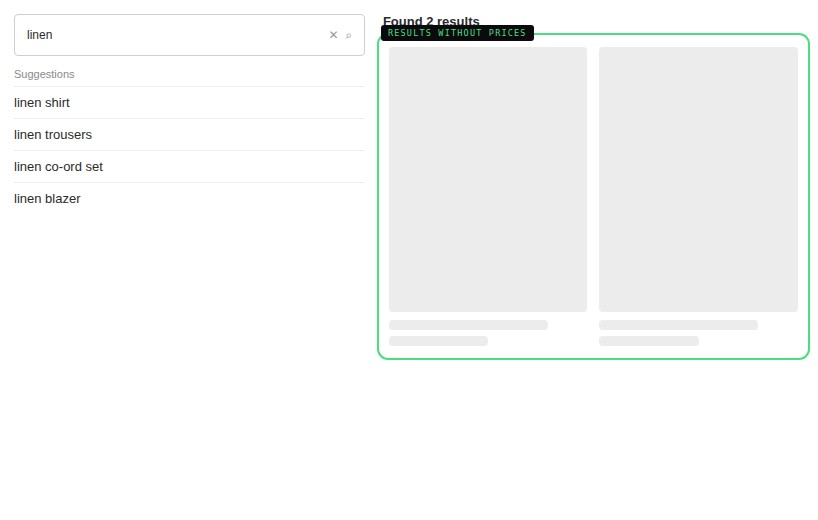
A visitor who searches has told you what they want. The best sites answer with the product and its price.
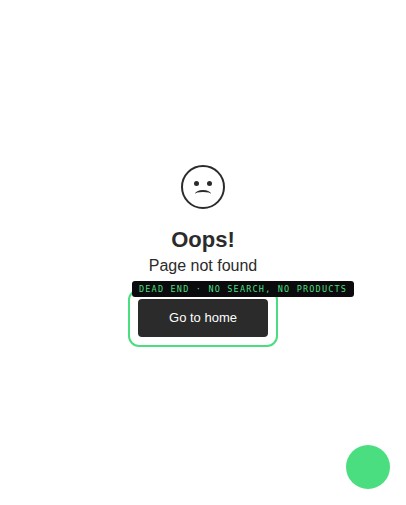
Mobile, logged out, every capture cropped to the thing it proves. Six of the 42 from one baseline, redrawn as schematics.


Every recommendation is judged against what a visit is supposed to end in, and what each outcome is worth. Nothing that already converts gets weakened.
The pass that reads a competitor has not seen your site, so it describes the category instead of your gaps.
A recommendation without a screenshot does not ship.
A separate pass checks every row against the evidence. Then an experienced marketer reads it again.
Most CRO advice assumes the only thing a site is for is checkout, and most audits are a list of best practices someone downloaded. Neither answers the question a founder actually has: of everything we could change, what should we do next, and why that one?
So the audit starts by writing down what a visit to your site is supposed to end in, walks your own site before anyone else's, and delivers a sheet that ranks every gap against the best sites around you, with the picture beside it. The sheet doubles as the tracker for what gets shipped.
A competitor finding with no answer to 'do we already do this' is not a recommendation. It is a note.
Two lines on the site and what a visit is supposed to end in. The first conversation takes half an hour.
Two lines on the outcome you are after. That is enough to start.
Competitor pattern · Schematic
The 9% is arithmetic at constant ad spend (1 ÷ 1.10). The 2x is Econsultancy's finding on structured optimisation programmes versus ad hoc ones. Neither is yet measured across our clients.